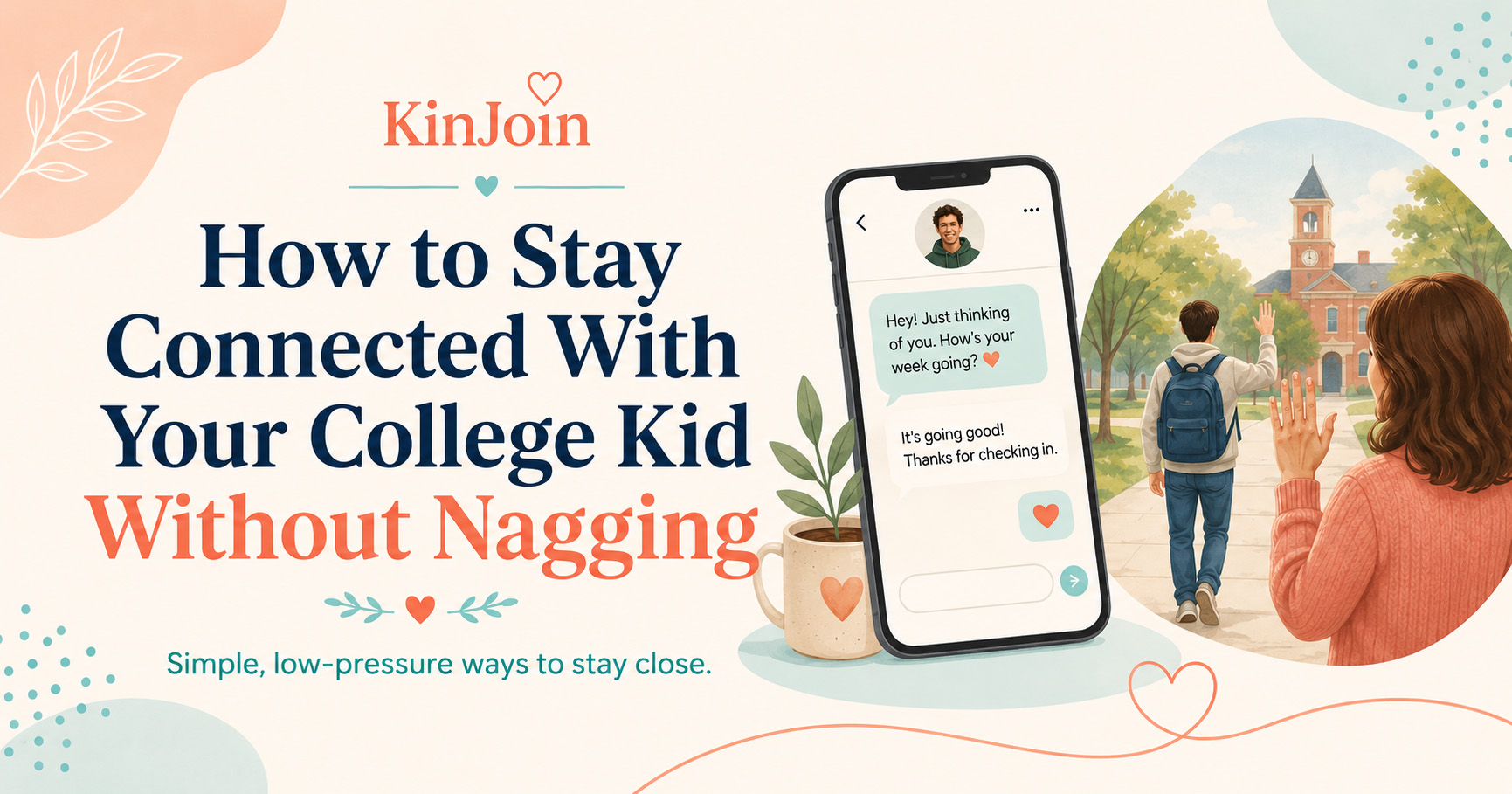
Sending a child to college is strange because, in many ways, you are doing exactly what you were supposed to do.
You raised them to become independent. You want them to make friends, build a life, try new things, and figure out who they are apart from you.
And still, when the texts get shorter or the replies take longer, it can sting.
You do not want to hover. You do not want to make them feel guilty. You do not want to become the parent who sends “Are you alive?” every time they go quiet.
But you also miss them.
You miss the ordinary little moments. The half-conversations in the kitchen. The random updates from their day. The comfort of knowing they made it home, ate something, laughed about something, or just existed nearby.
The good news is that staying connected does not have to mean constant texting, long phone calls, or emotional check-ins they are not ready for.
Sometimes the best connection is simple, low-pressure, and easy to answer.
Start with a lighter expectation
One of the hardest parts of this season is adjusting your expectations.
When your child lived at home, connection happened naturally. You saw their face. You heard them come in the door. You noticed their mood without needing an update.
Once they leave, you may feel like you need communication to replace all of that. But your college student may not experience it the same way. They are busy, distracted, overwhelmed, excited, tired, or trying to figure out their own rhythm.
That does not mean they do not love you.
It may simply mean they need connection to feel easy.
Instead of expecting daily recaps or deep conversations, try creating small touchpoints that do not require much from them.
Use prompts instead of questions that feel loaded
Some questions accidentally carry pressure.
“How are you?” can feel too big.
“Are you okay?” can feel like a trap.
“Why haven’t you called?” usually does not lead anywhere good.
A simple prompt can work better because it gives them something easy to respond to.
Try things like:
What was the best thing you ate this week?
Send me a picture of something funny you saw today.
What song has been stuck in your head lately?
What is one thing you are looking forward to this weekend?
What is your current favorite snack?
What is something that surprised you about college life?
What is one small win from today?
These kinds of questions do not demand a full emotional report. They just open the door.
And sometimes, once the door is open, more conversation follows naturally.
Let photos count as connection
Not every check-in has to be a paragraph.
A photo of their coffee, dorm desk, walk to class, laundry pile, pet from home, or random campus moment can say a lot.
For parents, a photo can feel reassuring. For college kids, sending a photo can feel easier than typing out a full update.
You can also send photos back. A picture of the dog. A sunset. Their favorite dinner. A sibling doing something ridiculous. A corner of home.
Small visual reminders can help everyone feel included without requiring a big conversation.
Create a rhythm before you are desperate for one
It is easier to build connection before the silence starts to feel painful.
A predictable rhythm helps because it removes some of the awkwardness. Instead of wondering, “Should I text? Am I bothering them?” there is already a small habit in place.
That rhythm could be:
a Sunday night check-in
a weekly photo swap
a family group chat question
a Friday “high and low” from the week
a quick daily prompt
a monthly family FaceTime
a standing lunch or coffee when they are home
The point is not to force closeness. The point is to make connection feel normal.
Keep it low-pressure
This may be the most important part.
College students are often balancing more than parents realize: new schedules, social pressure, academic stress, homesickness, independence, and the constant work of becoming an adult.
If every message from home feels like something they need to manage, they may pull back.
Low-pressure connection sounds more like:
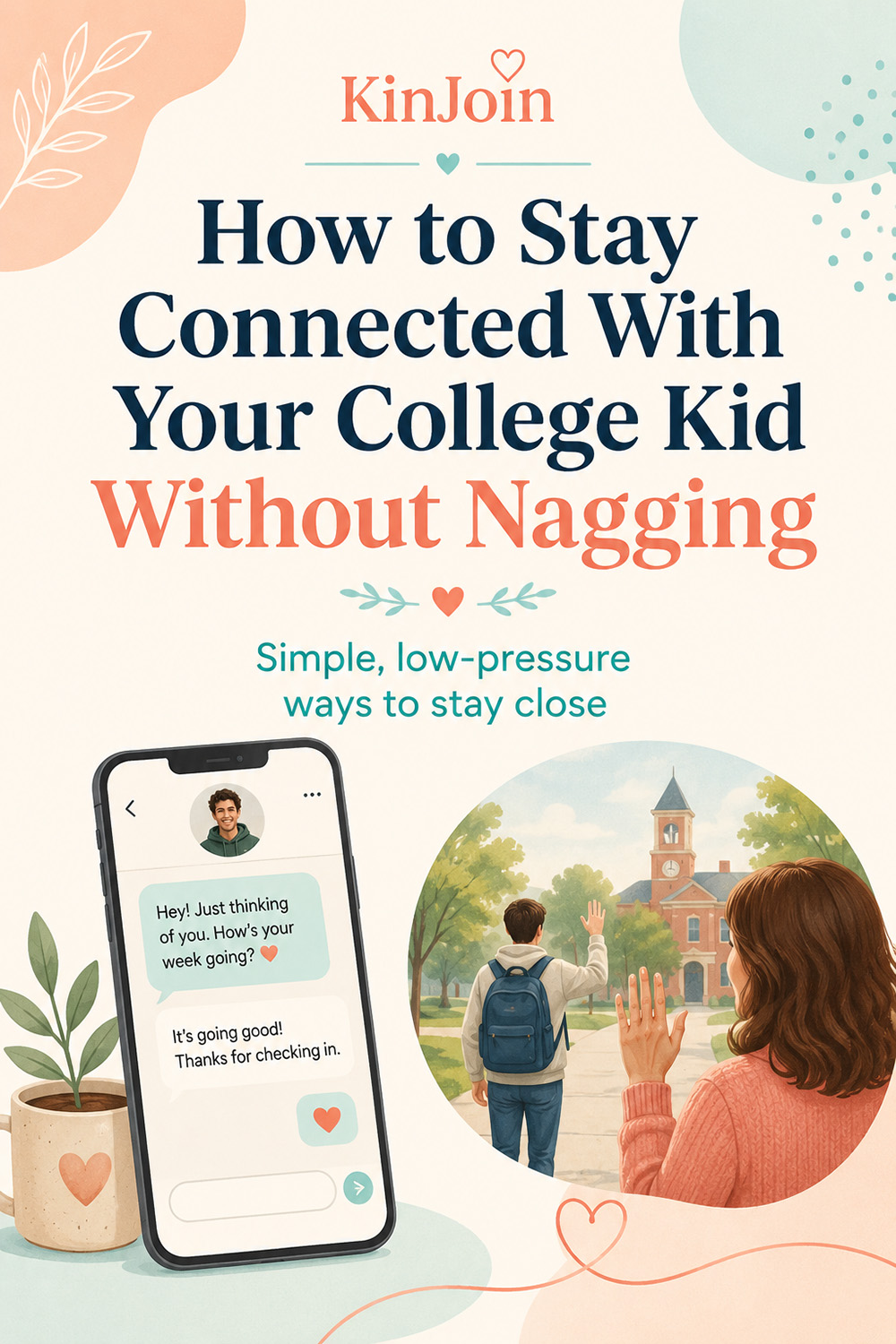
“Thinking of you. No need to reply right now.”
“Send me a picture from your day if you get a chance.”
“Hope your test went okay. Proud of you either way.”
“This made me think of you.”
“Quick question: what’s the best thing you ate this week?”
It leaves room for them to respond without feeling cornered.
Do not take every short reply personally
This is hard, but important.
A one-word reply does not always mean they are annoyed.
A delayed response does not always mean something is wrong.
A missed call does not always mean they are pulling away.
Sometimes they are in class. Sometimes they are with friends. Sometimes they are tired. Sometimes they are just eighteen or nineteen and still learning how to maintain relationships from a distance.
That does not mean your feelings are silly. It just means their communication style may not always reflect the depth of the relationship.
Find ways to stay connected as a family, not just one-on-one
Sometimes family connection works better when it does not depend on one parent texting one child over and over.
A shared family space can help everyone participate more naturally.
That could be a group text, a shared album, a weekly family question, or an app designed for simple check-ins.
The benefit of a group format is that one person’s answer can spark another person’s response. It feels less like a parent asking for information and more like the family staying in each other’s lives.
Remember that connection will look different now
This is the part that can hurt.
Staying close to your college kid will not look exactly like it did when they lived down the hall.
There may be fewer spontaneous conversations. Fewer shared meals. Fewer chances to know the little details of their day.
But different does not have to mean distant.
You are not trying to pull them back into childhood. You are learning how to stay connected as they grow into adulthood.
That takes patience. It takes flexibility. And yes, sometimes it takes swallowing the urge to send one more “just checking” text.
A simpler way to keep the conversation going
KinJoin was built for families in this exact season.
It gives your private family group one simple daily prompt that everyone can answer with text or a photo. No endless group chat pressure. No awkward “why haven’t you called?” energy. Just one easy way to check in and stay part of each other’s everyday lives.
It is especially helpful for parents and older kids who want to stay connected, but do not always know what to say.
One daily prompt. A few quick replies. A small window into each other’s day.
Sometimes that is enough to make the distance feel a little smaller.
Final thought
If you are missing your college kid, that does not mean you are clingy.
It means you love someone who is growing into a life that no longer revolves around your home.
That transition can be beautiful and painful at the same time.
The goal is not to nag them into staying close.
The goal is to create small, steady ways to remind each other:
We are still here.
We still belong to each other.
Even from a distance.